Swiss Regulatory Adjustments in Gambling: Consequences for Online Slots and Live Dealer Offerings
Vera Lang · Aug 24, 2026
Swiss Regulatory Adjustments in Gambling: Consequences for Online Slots and Live Dealer Offerings
Switzerland maintains a tightly controlled gambling environment where federal legislation governs the operation of online slot machines alongside live dealer formats, and recent adjustments continue to reshape licensing requirements, player protections, and market access for operators. The Federal Act on Gambling, enacted in 2019 and subject to ongoing refinements, establishes that only entities holding Swiss licenses may offer real-money games, which directly influences how slot titles and live-streamed table games reach domestic audiences.
Background of the Current Framework
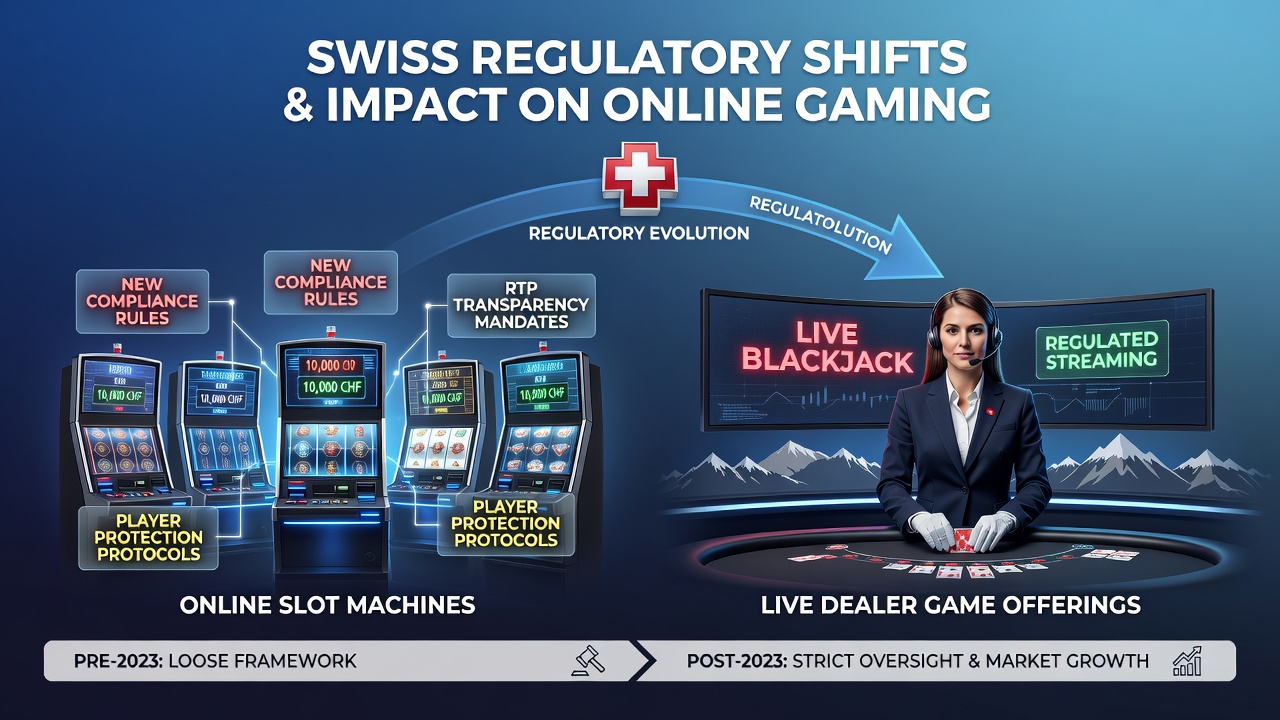
Observers note that prior to the 2019 overhaul, Swiss players often accessed international platforms while domestic operators operated under fragmented cantonal rules, yet the unified federal system introduced mandatory licensing through the Federal Gaming Board and required servers located within the country. Data from official records shows that by 2023 approximately 20 licensed operators had entered the market, with many expanding their portfolios to include both video slots and live dealer streams featuring roulette, blackjack, and baccarat.
These developments occurred while authorities monitored compliance with deposit limits, age verification, and advertising restrictions, and the framework explicitly separates casino-style games from lotteries and sports betting, which fall under separate supervisory bodies.
Key Shifts Emerging in 2025 and 2026
Authorities have signaled further clarifications scheduled for implementation around August 2026, particularly concerning technical standards for random number generators in slot machines and enhanced monitoring protocols for live dealer feeds. According to documentation released by the Federal Office of Justice, these measures aim to standardize encryption requirements and introduce real-time reporting of gameplay data to central oversight systems.
Operators must therefore adapt their platforms to transmit session information directly to Swiss servers, a change that affects both pre-recorded slot mechanics and interactive live dealer sessions where dealers operate from controlled studios. Research indicates that similar updates in other jurisdictions have led to measurable increases in operational costs for smaller providers while larger groups consolidate their market positions.
Effects on Online Slot Machine Offerings
Slot providers face new specifications for volatility disclosure and maximum stake thresholds under the forthcoming guidelines, which require clear labeling of return-to-player percentages and session time alerts. Several platforms have already begun integrating these features ahead of the August 2026 deadline, ensuring that Swiss users encounter consistent interfaces regardless of the chosen operator.
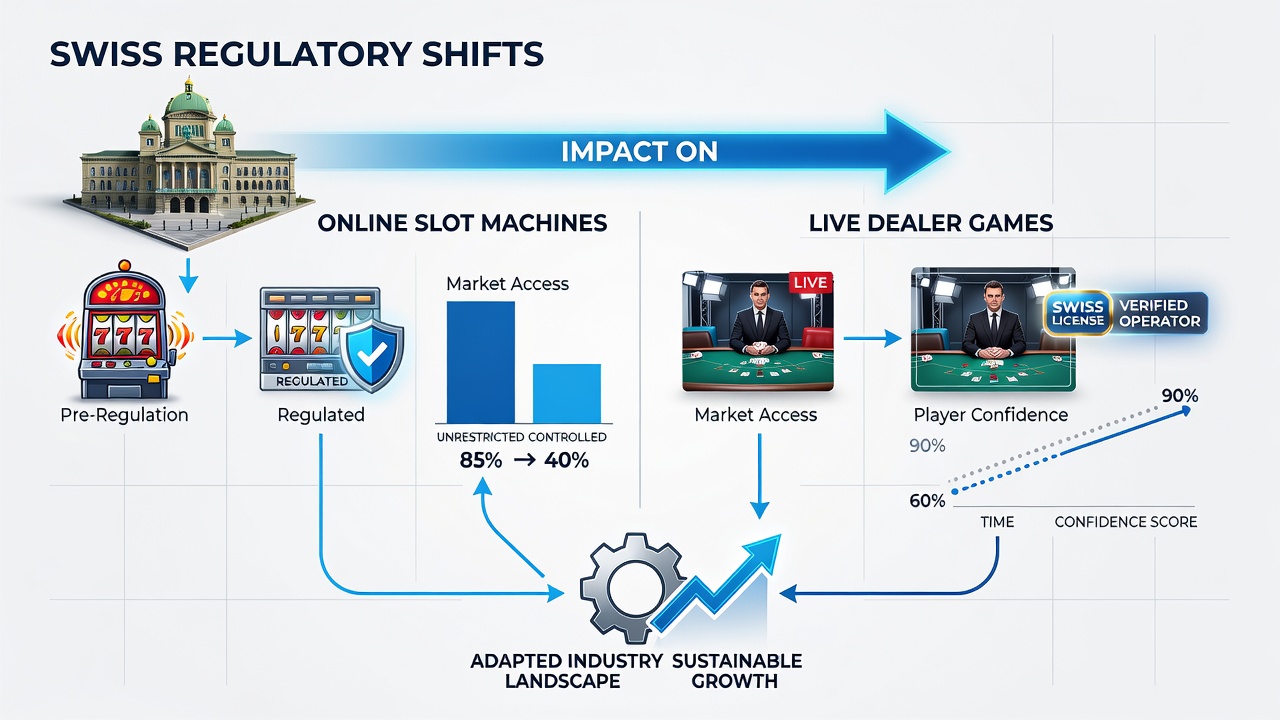
Industry figures reveal that licensed Swiss sites currently feature over 1,500 distinct slot titles, yet the regulatory tightening may limit the addition of high-volatility games unless they meet stricter testing criteria administered by accredited laboratories. Those who manage licensed operations report that collaboration with game developers now includes joint certification processes to confirm compliance before any title reaches the Swiss market.
Consequences for Live Dealer Game Provisions
Live dealer offerings encounter distinct challenges because they combine real-time human interaction with digital streaming technology, and updated rules emphasize studio location within Swiss territory or approved neighboring jurisdictions. This requirement ensures that regulatory bodies can conduct physical inspections while maintaining continuous oversight of dealer conduct and game integrity.
Platforms offering live roulette and blackjack have responded by investing in local facilities or forming partnerships with existing Swiss casinos, which allows them to stream games without violating cross-border restrictions. Evidence from compliance reports shows that such adaptations have preserved player access to popular variants while aligning with federal expectations for transparency in card shuffling and payout verification.
What's interesting is how these changes intersect with technological upgrades, since operators now deploy AI-assisted monitoring tools to flag irregular betting patterns in live sessions, a practice encouraged by upcoming 2026 reporting mandates.
Market and Player Implications
Player data collected through licensed portals indicates steady growth in participation rates for both slots and live dealer formats, although the average session duration has declined slightly following the introduction of mandatory reality checks. External analysis from the iGaming Ontario regulatory framework highlights comparable patterns in other regulated markets, where similar safeguards correlate with reduced instances of excessive play.
Meanwhile, the Swiss approach continues to prioritize domestic revenue retention, directing portions of operator fees toward addiction prevention programs and cantonal social services. This structure differentiates Switzerland from models seen in Australian state-level research, where funding allocation mechanisms vary significantly.
Conclusion
Swiss regulatory evolution demonstrates a consistent emphasis on controlled expansion of online gambling services, with slot machines and live dealer offerings adapting through technical compliance and operational restructuring ahead of the 2026 milestones. Licensed entities continue to refine their offerings while federal oversight ensures alignment with established player protection standards, producing a market environment that balances commercial activity with regulatory accountability.